The Vibe Father
"Apple sues OpenAI" hit breakout status in US rising searches over the past four hours, even though the federal complaint itself was filed on July 10, 2026. That pattern is common for legal stories, the filing lands, secondary coverage digests the wildest allegations, then search interest re-ignites days later as more people catch up. This article is the practical briefing for developers, product teams, and operators who need the claims, the partnership context, and what still is not proven in court.
Apple sued OpenAI and two individuals in the U.S. District Court for the Northern District of California, alleging trade secret misappropriation and related contract claims tied to OpenAI's consumer hardware ambitions. OpenAI denies interest in other companies' trade secrets. Nothing in a complaint is a final finding of fact. Treat every allegation as an allegation until discovery, rulings, or settlement change the picture.
For builders, the useful angle is not courtroom gossip. It is talent movement, hardware secrecy, partnership risk, and how AI labs and device makers collide when the same people who built one platform help invent the next. Companion pieces OpenAI / Hugging Face security incident, ROI measurement without hype, and vendor thrash insurance.
Search cluster around Apple vs OpenAI (past ~4h rising exports)
US rising-search exports, July 23, 2026 afternoon window. Legal and IPO curiosity moved together with the lawsuit query. Breakout is shown at the chart max.
What the complaint says, in plain English
According to Reuters, CNBC, the New York Times, and the public docket, Apple alleges a coordinated effort in which OpenAI and former Apple employees misappropriated confidential information useful for consumer hardware design and manufacturing. The suit names OpenAI entities, hardware executive Tang Tan (also reported as Tang Yew Tan), technical staff member Chang Liu, and IO Products, the Jony Ive-linked hardware company OpenAI acquired.
Apple's filing language is aggressive. Coverage quotes Apple saying OpenAI has been stealing trade secrets "at every level," from technical staff to the chief hardware officer, and in coordination with business partners. Allegations reported across outlets include coaching candidates to bring Apple parts to interviews, soliciting details about unreleased projects, coaching leavers on how to evade exit security, and even the alleged theft of an Apple laptop in one named-employee storyline.
Apple also claims OpenAI asked hardware partners to perform a metal finishing technique Apple invented while allegedly misleading partners into thinking they had Apple's permission. That kind of supply-chain allegation matters because hardware secrets often live as much in process know-how as in CAD files.
Parties and public posture (as of July 23, 2026 reporting)
| Party | Role in suit | Public posture |
|---|---|---|
| Apple Inc. | Plaintiff | Alleges trade secret theft to aid rival hardware |
| OpenAI entities | Defendants | Says it has no interest in other firms' secrets |
| Tang Tan | Named individual / hardware leader | Accused of directing improper interview practices |
| Chang Liu | Named individual | Accused of wrongfully taking confidential materials |
| IO Products, LLC | Named defendant | Hardware vehicle tied to OpenAI's device plans |
Why the partnership context makes this explosive
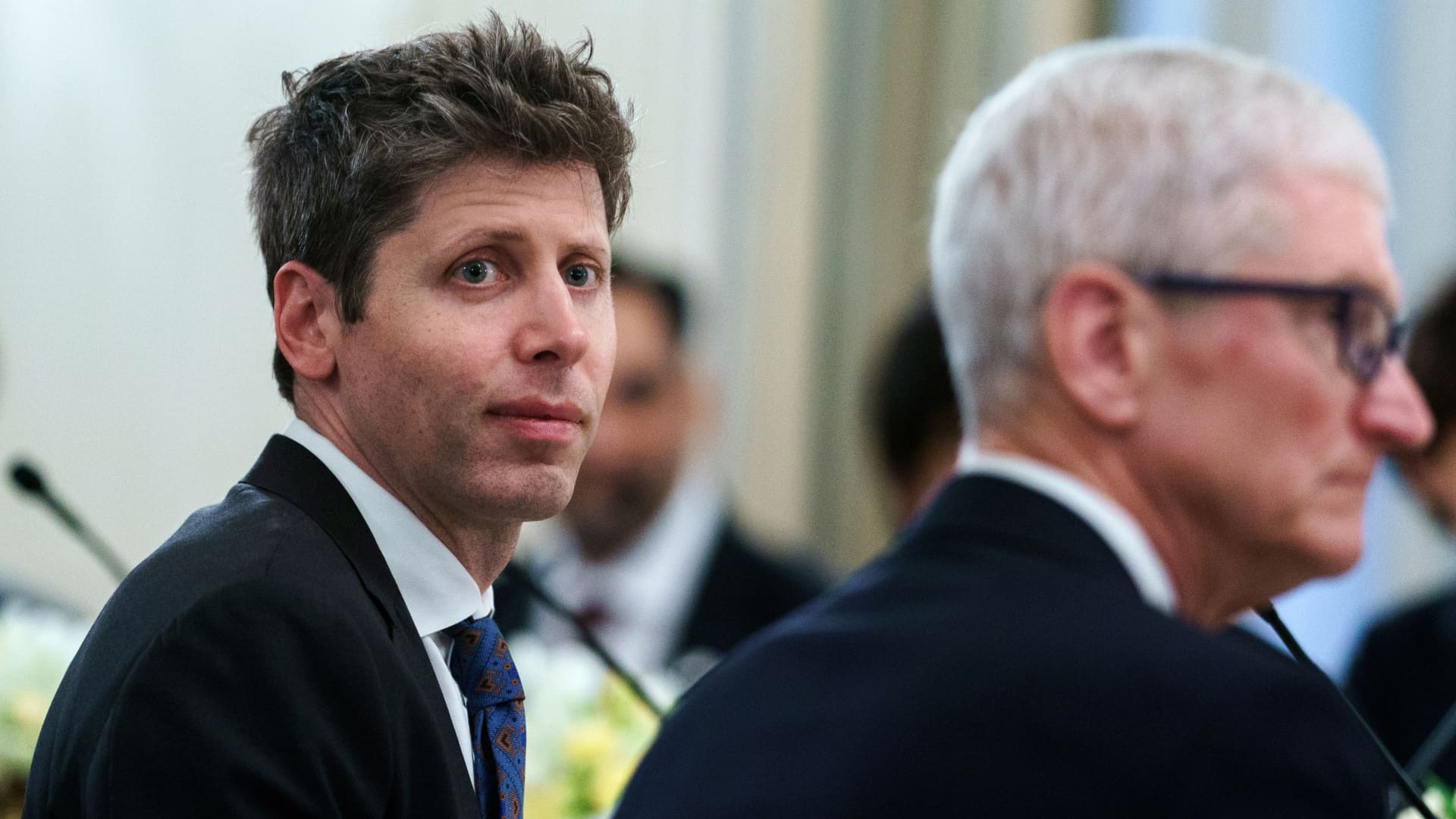
Apple and OpenAI publicly partnered in 2024 to integrate ChatGPT into Apple's OS experience. Sam Altman visited Apple for the announcement theater. That alliance always had tension under the surface. Apple wants control of on-device intelligence and user trust, while OpenAI wants distribution plus, now, its own hardware story after the multi-billion-dollar IO Products deal with Jony Ive's team.
CNBC notes Apple's next Siri wave is expected to lean on Google Gemini rather than OpenAI models. Whether or not that detail survives every product reshuffle, the strategic picture is clear enough. Distribution partners become competitors when both sides chase the same device surface. Lawsuits are one language companies use when talent, secrets, and roadmaps collide.
What is not decided yet
A complaint is a map of one side's theory. Courts have not ruled that OpenAI stole anything. OpenAI has not been found liable. Individual defendants have not been convicted of anything in this civil matter. Discovery may support Apple, narrow Apple's claims, or produce messy mixed findings. Secondary coverage about "the wildest allegations" is not the same thing as proven fact.
Readers should also separate this case from other OpenAI legal noise. Rising searches for "scott winters openai lawsuit" and older Musk-related litigation are different disputes. Bundle them only when a source explicitly connects the parties or issues. Lazy aggregation creates SEO sludge and bad mental models.
Why search re-spiked days after the filing
Legal SEO often has a double curve. Day-zero traffic comes from headline readers. Day-plus traffic comes from people who saw a podcast, a YouTube recap, a workplace Slack link, or a DocumentCloud dump of the complaint. TechCrunch's later piece on the wildest allegations is a classic second-wave amplifier. Breakout labels in rising-search tools can therefore appear while the docket is already a week old.
If you are writing or productizing around this topic, do not invent a fresh "just filed today" frame unless your source is literally today's docket event. Accurate timestamps protect trust. "Why people are searching this now" is a better angle than fake urgency.
Implications for AI product and engineering leaders
- Talent is strategy. When hundreds of former Apple employees land at a rival hardware-AI lab, process and culture travel with them even when no law is broken.
- Exit security is product security. Laptop returns, access revocation, prototype custody, and interview coaching rules are not HR trivia.
- Partner risk is real. Chat integrations, model distribution deals, and co-marketing can sour quickly when roadmaps compete.
- Hardware know-how is sticky. Process recipes and supplier relationships can be more valuable than a single CAD file.
- IPO and litigation interact. OpenAI's public-market story, whenever it lands, will price legal overhangs into the narrative even if claims fail.
None of those points requires believing every sentence in Apple's complaint. They are operational lessons that remain true in a world where labs hire aggressively from device companies and device companies hire aggressively from labs.
What software teams should do this month
If you are not Apple or OpenAI, you still have homework. Review how your company handles prototypes, design docs, and customer hardware integrations when employees interview elsewhere. Make sure interviewers are trained not to solicit confidential third-party materials. Make sure departing staff checklists actually revoke access the same day. Make sure vendors cannot be socially engineered into "helping" a former partner without a written authorization trail.
If you build AI features inside a big-platform partnership, write a contingency memo, what happens if the partner becomes a competitor, if the model provider is enjoined from a product line, or if co-branded features must be unwound on short notice. Contingency memos feel paranoid until the week you need one.
IPO curiosity is part of the same search session
Queries for openai ipo date, openai ipo, and ownership questions rose alongside the lawsuit cluster. Public reporting through mid-2026 has pointed at confidential filing chatter and delayed timing expectations, with some market commentary sliding probability into 2027. There is still no universally confirmed public listing date as of this writing. Do not treat a TradingView symbol page or a prediction-market vibe as a prospectus.
For operators, the practical IPO takeaway is simpler, legal headlines will keep recirculating as long as a listing narrative is live. Your customers will ask "is OpenAI okay?" in the same breath as "which model should we pin?" Answer with vendor-risk language, not stock tips.
Common questions
Did Apple really sue OpenAI?
Yes. Apple filed a federal trade-secret complaint in the Northern District of California on July 10, 2026. The case was still drawing fresh search interest on July 23.
What does Apple claim OpenAI stole?
Apple alleges misappropriation of confidential hardware designs, processes, and related secrets useful for consumer devices, including through hiring and interview practices. Those claims are unproven in court.
Does this end the Apple–OpenAI software partnership?
Public reporting at filing time said Apple did not declare an immediate end to ChatGPT integrations. Partnership status can change, watch official product statements rather than assuming a full divorce from a complaint alone.
Is OpenAI guilty?
No court has ruled that. OpenAI says it is not interested in other companies' trade secrets. Civil litigation will take time.
Sources and further reading
- Reuters. Apple sues OpenAI over trade secrets
- CNBC. Apple sues OpenAI alleging trade secret theft
- NYT. Apple accuses OpenAI of stealing secrets
- TechCrunch, wildest allegations in the complaint
- CourtListener docket. Apple Inc. v. Liu
- OpenAI / Hugging Face security incident on this site
A practical way to keep this advice alive is to write a one-page operating note after you read a news cycle. Name the default tool for each lane, the fallback path, the private tasks that decide upgrades, and the person who can change the pin. When the next launch post arrives, open that note before you open the settings panel. Most thrash comes from changing defaults in the same hour emotions peak.
Share the note in the engineering channel and invite disagreement with evidence. If someone believes a new product or model is better, they should run the suite and paste the score delta, the cost delta, and one trajectory that shows why. Social proof is not a substitute for that packet. The packet also protects quieter teammates who do not enjoy arguing in public but do notice quality changes in review.
Keep a short failure diary for AI-assisted work. When a patch looks fluent and still breaks production assumptions, write three sentences, what the agent assumed, what the system actually required, and what check would have caught it. Over a month those sentences become better prompts, better tests, and better training for humans. They also become the opposite of hype, durable institutional memory.
Budget attention the way you budget tokens. Not every article, model card, or executive quote deserves a process change. Create a weekly thirty-minute review where platform owners scan only the changes that touch your default stack. Everything else can wait. This is how you stay informed without becoming a full-time launch spectator.
Finally, keep the human center of the work visible. Tools change weekly. People still carry pager pain, customer trust, and the craft of clear design. If your AI program makes those people faster at responsible work, it is succeeding. If it only increases the volume of plausible text that others must clean up, it is a costume. Measure which one you are funding and adjust without drama.
When leadership asks for a simple story, give a simple true story. We route by task. We pin revisions. We measure accepted work and repair time. We keep a backup path. We do not bet the company on a single delayed SKU or a single generous context window. That story is calm enough for a board slide and strong enough for a Monday standup.
If you manage a mixed-seniority team, pair AI rollout with explicit mentorship time. Juniors can learn quickly with agents, and they can also learn brittle habits quickly. Require them to explain why a patch is safe before merge. Require seniors to review the risky surfaces even when the diff looks tidy. The combination builds judgment instead of dependence.
Vendors will keep shipping. That is their job. Your job is to turn shipping into selective adoption. The difference is not cynicism. The difference is craft. Craft is what makes software feel reliable to the humans who never see your model names and only feel whether the product works on a busy afternoon.
A practical way to keep this advice alive is to write a one-page operating note after you read a news cycle. Name the default tool for each lane, the fallback path, the private tasks that decide upgrades, and the person who can change the pin. When the next launch post arrives, open that note before you open the settings panel. Most thrash comes from changing defaults in the same hour emotions peak.
Share the note in the engineering channel and invite disagreement with evidence. If someone believes a new product or model is better, they should run the suite and paste the score delta, the cost delta, and one trajectory that shows why. Social proof is not a substitute for that packet. The packet also protects quieter teammates who do not enjoy arguing in public but do notice quality changes in review.
Keep a short failure diary for AI-assisted work. When a patch looks fluent and still breaks production assumptions, write three sentences, what the agent assumed, what the system actually required, and what check would have caught it. Over a month those sentences become better prompts, better tests, and better training for humans. They also become the opposite of hype, durable institutional memory.