The Vibe Father
Agentic AI has made writing code dramatically easier. The next challenge is everything else. Industry voices put the remaining work at something like 60 to 70 percent of the developer job, understanding messy requirements, negotiating tradeoffs, proving safety, integrating systems, and carrying responsibility when production hurts.
This article argues that the winners of the next phase will not be the teams that generate the most code. They will be the teams that teach agents to participate in the non-code work without laundering accountability. Codegen was the tutorial level. Integration, verification, and organizational judgment are the campaign.
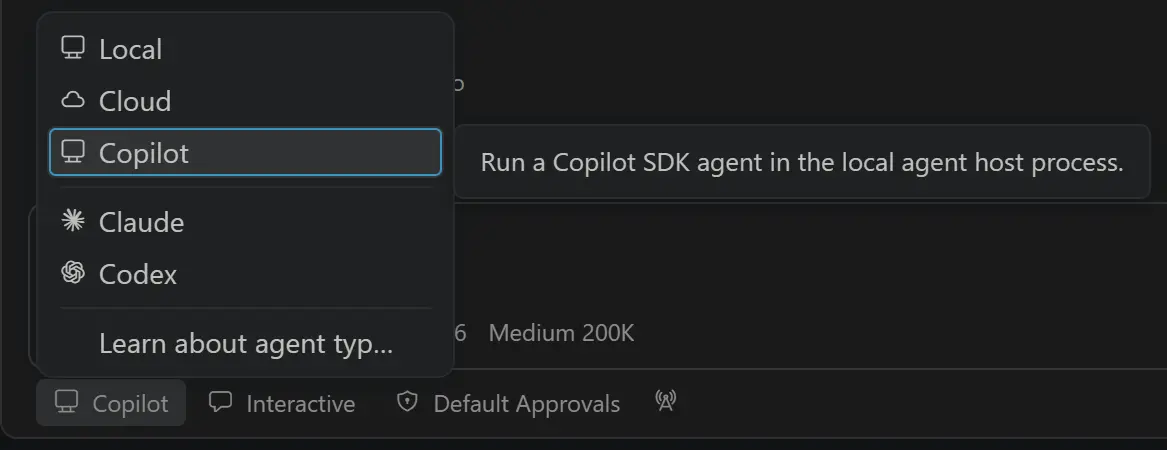
See harness design, security review focus, and IDE agent hosts for implementation surfaces.
Editorial difficulty weighting once basic code generation is widely available.
What agents still botch
Agents still struggle when the acceptance criteria are social. “Make it feel faster” is not a unit test. “Do not upset the enterprise customer’s workflow” is not a linter rule. Humans translate those statements into constraints. Agents can help draft the translation, but someone still owns the call.
They also struggle when systems are only half-observable. Missing traces, flaky environments, and undocumented side effects punish pure reasoning. The fix is better environment tooling, not only a bigger model.
And they struggle with irreversible actions. Deleting data, emailing customers, changing billing, or opening security groups are not ordinary file edits. Those need higher ceremony forever.
Upgrade the definition of done
If your definition of done is “code compiles,” agents will flood you with compiled debt. Raise the bar. Done means tests, observability hooks where needed, docs for human operators, and a rollback note for risky changes. Put that definition in the harness so the agent sees it every run.
This is how you convert codegen abundance into product progress. Without a higher bar, abundance becomes noise.
| Job | Agent readiness mid-2026 | Human role |
|---|---|---|
| Boilerplate feature slice with tests | High | Spot-check and merge |
| Legacy modernization map | Medium | Validate sequencing |
| Incident response drafts | Medium | Own communication and action |
| Threat modeling | Low to medium | Lead, use AI as challenger |
| Cross-company contract negotiation via code APIs | Low | Almost entirely human |
Design agents for collaboration, not replacement theater
Replacement theater is when leadership talks as if headcount can fall immediately because demos look smooth. Collaboration design is when you build interfaces for handoff, the agent proposes, the human accepts, the system logs both. Collaboration scales. Theater creates quiet resistance and hidden quality debt.
Give agents structured ways to ask for missing requirements. Give humans structured ways to mark a trajectory as trusted or toxic. Over time, those marks train your routing and your prompts better than any slogan.
Skills humans should double down on
- Problem framing and acceptance design.
- System thinking across services and data flows.
- Security intuition at trust boundaries.
- Evaluation design for models and harnesses.
- Communication under uncertainty.
- Mentorship so juniors still learn judgment while using agents.
These skills become more valuable as typing becomes cheaper. That is good news for serious engineers. It is challenging news for organizations that only reward visible code volume.
Where to spend the next engineering dollar after basic agents already write code.
Verdict
The next challenge for coding agents is the rest of software’s real job, clarity, integration, proof, and ownership. Build for those layers now. Keep humans accountable. Let agents draft widely and merge narrowly. That is how the everywhere era becomes an adult era.
Sources and further reading
- InfoWorld, the next challenge for coding agents
- InfoWorld, agentic coding is everywhere
- What is vibe coding
- AI coding benchmarks
- Benchmarks methodology
Common questions
Will agents eventually own production?
They may act in production with guardrails, but organizations still need human accountability paths.
Should juniors still learn to code by hand?
Yes enough to review and repair. Blind dependence is career risk.
What is the best pilot project for next-frontier agents?
CI failure triage with mandatory human merge on risky services.
A practical way to keep this advice alive is to write a one-page operating note after you read a news cycle. Name the default model for each lane, the fallback provider, the private tasks that decide upgrades, and the person who can change the pin. When the next launch post arrives, open that note before you open the settings panel. Most thrash comes from changing defaults in the same hour emotions peak.
Share the note in the engineering channel and invite disagreement with evidence. If someone believes a new model is better, they should run the suite and paste the score delta, the cost delta, and one trajectory that shows why. Social proof is not a substitute for that packet. The packet also protects quieter teammates who do not enjoy arguing in public but do notice quality changes in review.
Keep a short failure diary for AI-assisted work. When a patch looks fluent and still breaks production assumptions, write three sentences, what the agent assumed, what the system actually required, and what check would have caught it. Over a month those sentences become better prompts, better tests, and better training for humans. They also become the opposite of hype, durable institutional memory.
Budget attention the way you budget tokens. Not every article, model card, or executive quote deserves a process change. Create a weekly thirty-minute review where platform owners scan only the changes that touch your default stack. Everything else can wait. This is how you stay informed without becoming a full-time launch spectator.
Finally, keep the human center of the work visible. Tools change weekly. People still carry pager pain, customer trust, and the craft of clear design. If your AI program makes those people faster at responsible work, it is succeeding. If it only increases the volume of plausible text that others must clean up, it is a costume. Measure which one you are funding and adjust without drama.
When leadership asks for a simple story, give a simple true story. We route by task. We pin revisions. We measure accepted work and repair time. We keep a backup path. We do not bet the company on a single delayed SKU or a single generous context window. That story is calm enough for a board slide and strong enough for a Monday standup.
If you manage a mixed-seniority team, pair AI rollout with explicit mentorship time. Juniors can learn quickly with agents, and they can also learn brittle habits quickly. Require them to explain why a patch is safe before merge. Require seniors to review the risky surfaces even when the diff looks tidy. The combination builds judgment instead of dependence.
Vendors will keep shipping. That is their job. Your job is to turn shipping into selective adoption. The difference is not cynicism. The difference is craft. Craft is what makes software feel reliable to the humans who never see your model names and only feel whether the product works on a busy afternoon.
A practical way to keep this advice alive is to write a one-page operating note after you read a news cycle. Name the default model for each lane, the fallback provider, the private tasks that decide upgrades, and the person who can change the pin. When the next launch post arrives, open that note before you open the settings panel. Most thrash comes from changing defaults in the same hour emotions peak.
Share the note in the engineering channel and invite disagreement with evidence. If someone believes a new model is better, they should run the suite and paste the score delta, the cost delta, and one trajectory that shows why. Social proof is not a substitute for that packet. The packet also protects quieter teammates who do not enjoy arguing in public but do notice quality changes in review.
Keep a short failure diary for AI-assisted work. When a patch looks fluent and still breaks production assumptions, write three sentences, what the agent assumed, what the system actually required, and what check would have caught it. Over a month those sentences become better prompts, better tests, and better training for humans. They also become the opposite of hype, durable institutional memory.
Budget attention the way you budget tokens. Not every article, model card, or executive quote deserves a process change. Create a weekly thirty-minute review where platform owners scan only the changes that touch your default stack. Everything else can wait. This is how you stay informed without becoming a full-time launch spectator.
Finally, keep the human center of the work visible. Tools change weekly. People still carry pager pain, customer trust, and the craft of clear design. If your AI program makes those people faster at responsible work, it is succeeding. If it only increases the volume of plausible text that others must clean up, it is a costume. Measure which one you are funding and adjust without drama.
When leadership asks for a simple story, give a simple true story. We route by task. We pin revisions. We measure accepted work and repair time. We keep a backup path. We do not bet the company on a single delayed SKU or a single generous context window. That story is calm enough for a board slide and strong enough for a Monday standup.
If you manage a mixed-seniority team, pair AI rollout with explicit mentorship time. Juniors can learn quickly with agents, and they can also learn brittle habits quickly. Require them to explain why a patch is safe before merge. Require seniors to review the risky surfaces even when the diff looks tidy. The combination builds judgment instead of dependence.
Vendors will keep shipping. That is their job. Your job is to turn shipping into selective adoption. The difference is not cynicism. The difference is craft. Craft is what makes software feel reliable to the humans who never see your model names and only feel whether the product works on a busy afternoon.
A practical way to keep this advice alive is to write a one-page operating note after you read a news cycle. Name the default model for each lane, the fallback provider, the private tasks that decide upgrades, and the person who can change the pin. When the next launch post arrives, open that note before you open the settings panel. Most thrash comes from changing defaults in the same hour emotions peak.
Share the note in the engineering channel and invite disagreement with evidence. If someone believes a new model is better, they should run the suite and paste the score delta, the cost delta, and one trajectory that shows why. Social proof is not a substitute for that packet. The packet also protects quieter teammates who do not enjoy arguing in public but do notice quality changes in review.
Keep a short failure diary for AI-assisted work. When a patch looks fluent and still breaks production assumptions, write three sentences, what the agent assumed, what the system actually required, and what check would have caught it. Over a month those sentences become better prompts, better tests, and better training for humans. They also become the opposite of hype, durable institutional memory.
Budget attention the way you budget tokens. Not every article, model card, or executive quote deserves a process change. Create a weekly thirty-minute review where platform owners scan only the changes that touch your default stack. Everything else can wait. This is how you stay informed without becoming a full-time launch spectator.
Finally, keep the human center of the work visible. Tools change weekly. People still carry pager pain, customer trust, and the craft of clear design. If your AI program makes those people faster at responsible work, it is succeeding. If it only increases the volume of plausible text that others must clean up, it is a costume. Measure which one you are funding and adjust without drama.
When leadership asks for a simple story, give a simple true story. We route by task. We pin revisions. We measure accepted work and repair time. We keep a backup path. We do not bet the company on a single delayed SKU or a single generous context window. That story is calm enough for a board slide and strong enough for a Monday standup.
If you manage a mixed-seniority team, pair AI rollout with explicit mentorship time. Juniors can learn quickly with agents, and they can also learn brittle habits quickly. Require them to explain why a patch is safe before merge. Require seniors to review the risky surfaces even when the diff looks tidy. The combination builds judgment instead of dependence.